A veneer is thin, covers only the front surface of your tooth, and exists primarily for aesthetic improvement. Think of it as a carefully crafted facade designed to enhance what the world sees when you smile. A dental crown, by contrast, covers your entire tooth, front, back, and sides, and serves both protective and functional purposes. Think of it as a comprehensive restoration that reinforces and preserves what remains of your natural tooth structure.
Both are excellent dental restorations with proven track records. But they serve very different purposes, and choosing between them isn’t a matter of which is “better.” It’s a matter of which is right for your specific situation. Understanding that difference is essential when making decisions about your dental health and your smile. Here’s what you should know.
Veneers: The Aesthetic Specialist
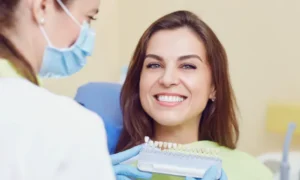
Porcelain veneers are wafer-thin shells that bond to the front of your teeth. They’re crafted from high-quality ceramic and custom-made to match the color, shape, and size of your natural teeth.
What they fix: Veneers are primarily cosmetic. They’re ideal for teeth that are discolored, slightly chipped, misshapen, or have small gaps between them. They’re also a great solution for teeth that don’t respond well to whitening.
The process: Dr. Sowell removes a tiny amount of enamel from the front of your tooth (about the thickness of a fingernail) to make room for the veneer. Then he takes an impression. In our in-office lab, master ceramist James Chung crafts your veneer with incredible precision. At your next visit, we bond it permanently to your tooth.
The commitment: Veneers are permanent. Once that enamel is removed, you’ll always need a veneer or crown on that tooth. But with good care, they can last 10 to 15 years or more.
The limitations: Veneers don’t fix structural problems. If your tooth is heavily decayed, cracked deeply, or has a large filling, a veneer isn’t strong enough to hold things together. Veneers are for teeth that are basically healthy but don’t look the way you want them to.
Crowns: The All-Rounder
Dental crowns are caps that cover your entire tooth. They help restore both appearance and function. Think of them as a full-body makeover for a damaged tooth.
What they fix: Crowns are used for teeth that are chipped, broken, severely decayed, or have had root canal treatment. They also anchor bridges and cover dental implants. If a tooth is too damaged for a filling but still worth saving, a crown is usually the answer.
The process: Dr. Chen or Dr. Sowell prepares your tooth by removing any decay and reshaping what remains. Then they take an impression. James Chung crafts your crown in our on-site lab. And because we have that lab right here, we can often offer same-day crowns. No temporary crown. No waiting weeks. And no second visit.
The commitment: Crowns also require permanent alteration of your tooth. But because they cover the entire tooth, they provide much more structural support than a veneer. With proper care, crowns can last 10 to 15 years or more.
The limitations: Crowns require removing more tooth structure than veneers. That’s not a drawback if your tooth needs the protection, but if your tooth is healthy and just needs cosmetic improvement, a veneer is a more conservative choice.
So Which One Is Right for You?
It really comes down to what your tooth needs.
Veneers are the answer if:
- Your tooth is basically healthy but has cosmetic flaws
- You want to change the color, shape, or size of a tooth
- You have gaps you’d like to close
- You have multiple teeth with similar cosmetic issues
Crowns are the answer if:
- Your tooth is chipped, broken, or severely decayed
- You’ve had a root canal
- You need to cover an implant
- Your tooth needs structural reinforcement
The Aesthetic Dentistry Centre Difference
Dr. Sowell is a nationally recognized cosmetic dentist. Dr. Chen is a prosthodontist trained in restoring and replacing teeth. And James Chung is our master ceramist, crafting your restoration right here in our office.
That means when you come in for a consultation, you’re getting expertise from every angle. We don’t just recommend what’s popular. We recommend what’s right for you.
Still Not Sure?
That’s what consultations are for. Dr. Chen or Dr. Sowell will examine your tooth, talk through your goals, and explain which option makes sense for your specific situation.
Call our office and schedule a visit. We’ll help you figure out whether you need the contact lens or the helmet, or something else entirely.