When you lose a tooth, the bone that used to hold that tooth starts to disappear. No root means no stimulation. And without stimulation, your jawbone slowly resorbs, meaning it shrinks and softens over time. This doesn’t happen overnight. But leave a missing tooth alone for a year or two, and you might lose a significant amount of bone volume. By the time you decide you want a dental implant in Plano, there may not be enough healthy bone left to support it. That’s where bone grafting comes in.
What Actually Is a Bone Graft?
A bone graft sounds intense. But it’s simply a way to add bone material to an area of your jaw that doesn’t have enough natural bone to hold an implant. That material can come from a donor source, a synthetic substitute, or occasionally from another area of your own mouth.
Think of it like adding soil to a garden bed that’s eroded away. You’re rebuilding the foundation so something new can grow there.
The graft material acts as a scaffold. Over several months, your body replaces that material with your own natural bone. By the time healing is complete, the graft has become you. Not a foreign substance. Just your own healthy bone, ready to support an implant.
Why Would Someone Need a Bone Graft?
- Tooth loss: When a tooth goes missing, the bone that surrounds it no longer has a job. It gradually collapses. The longer you wait to replace the tooth, the more bone you lose.
- Gum disease: Advanced periodontal disease affects more than just your gums. It eats away at the bone underneath. Even patients who still have their natural teeth may not have enough bone for implants because of past or current gum disease.
- Sinus location: This one applies specifically to upper molars. Your sinuses sit right above your upper jaw. In some patients, the sinus cavity is large and sits low, leaving very little bone between the sinus and the tooth roots. A sinus lift, a specific type of bone graft, raises the sinus floor and adds bone underneath.
- Injury or trauma: A car accident, a fall, or even a hard impact during sports can crack or collapse the jawbone in a specific spot.
Does a Bone Graft Hurt?
You’ll be completely numb during the procedure. Most patients say the discomfort afterward is similar to having a tooth extracted. Some swelling. Some soreness. Over-the-counter pain medication usually handles it just fine.
The bigger commitment is time. After your graft, you’ll need several months of healing before Dr. Chen can place the implant. Your body needs time to turn that graft material into living bone. Rushing the process risks implant failure.
Does This Mean More Appointments?
Yes, but it’s not all that complicated. At Aesthetic Dentistry Centre, Dr. Chen handles everything in one place. She evaluates your bone, performs the graft if needed, places the implant later, and crafts your final crown with master ceramist James Chung in their on-site ceramic lab.
You’re not bouncing between an oral surgeon’s office and a general dentist’s office. No lost referrals. No communication gaps. One team. One roof. One treatment plan.
Is a Bone Graft Always Necessary?
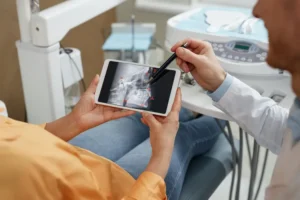
Not always. Some patients have plenty of dense, healthy bone right from the start. Dr. Chen will take a CT scan during your consultation to measure exactly how much bone you have and whether it’s sufficient for an implant.
If you do need a graft, it’s not a failure. It’s just the next step. Thousands of successful implants start with a bone graft. Yours can too.
Restore Your Smile Today
Bone grafting sounds scarier than it is. It’s a routine procedure that allows patients who were told they didn’t have enough bone to still get dental implants.
If you’ve been living with a missing tooth (or several), don’t assume implants aren’t an option. Dr. Chen has helped countless patients rebuild their bone and their smiles.
Call (972) 382-6855 or request a free consultation online. Let’s find out what your jawbone actually needs.