
Your gums don’t get the attention they deserve. You brush your teeth, you floss (mostly), and you visit your Plano dentists twice a year. But when was the last time you really thought about your gums?
Your gums aren’t just the pink tissue that holds your teeth in place. They’re a barrier between your mouth and the rest of your body. When that barrier is healthy, it protects you. When it’s not, the consequences can reach far beyond your smile.
Dr. Sara Chen and Dr. Mark Sowell at Aesthetic Dentistry Centre in Plano screen for the early signs of gum disease during routine dental exams to help patients avoid disease and damage. But understanding why gum health matters and what you can do about it starts with understanding the connection between your mouth and your body.
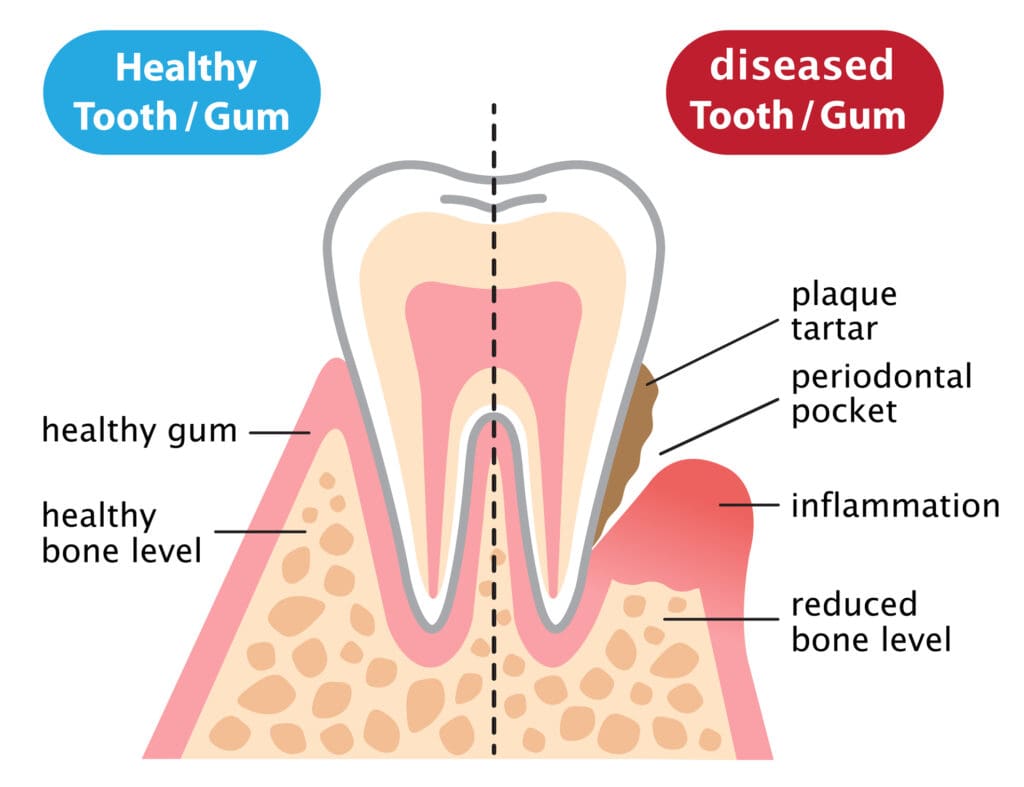
Your Gums: The Gateway to Your Body
Healthy gums act as a seal around your teeth, keeping bacteria in your mouth rather than in your bloodstream. But when that seal breaks down due to poor oral hygiene or gum disease, bacteria can enter your circulation and travel to other parts of your body.
The link between gum disease and systemic health isn’t just a theory. Decades of research have established clear connections between chronic gum inflammation and conditions affecting your heart, blood sugar, lungs, and even your joints.
Here’s what the science tells us.
Gum Disease and Your Heart
Studies have found that people with gum disease are at higher risk for cardiovascular issues. The connection appears to be inflammation. Chronic gum inflammation triggers a cascade of inflammatory responses that can affect the lining of your arteries.
This doesn’t mean gum disease causes heart attacks. But it does mean that having one condition can make the other more likely and that treating your gums may have benefits that reach well beyond your mouth.
If you have a family history of heart issues, taking care of your gums isn’t just about keeping your smile healthy. It’s about protecting your heart.
Gum Disease and Diabetes
The relationship between gum disease and diabetes is a two-way street. People with diabetes are more susceptible to infections, including gum disease. And when blood sugar is poorly controlled, gum disease can progress faster and be more difficult to treat.
At the same time, untreated gum disease can make it harder to control blood sugar. The inflammation caused by gum disease can interfere with your body’s ability to use insulin effectively, creating a cycle that’s hard to break.
Treating gum disease can actually help improve blood sugar control. For people with diabetes, regular dental care is a mandatory part of managing the condition.
Gum Disease and Your Lungs
Bacteria from your mouth can be inhaled into your lungs, increasing the risk of respiratory infections like pneumonia. This is especially concerning for older adults, people with compromised immune systems, and those with chronic respiratory conditions.
Maintaining healthy gums reduces the bacterial load in your mouth, which in turn reduces the amount of bacteria you inhale. It’s a simple but powerful way to protect your lungs.
Gum Disease and Pregnancy
Pregnant women with gum disease are at higher risk for preterm birth and low birth weight. The exact mechanism isn’t fully understood, but researchers believe the inflammatory response triggered by gum disease can affect the developing fetus.
If you’re pregnant or planning to become pregnant, a dental checkup should be part of your prenatal care. Treating gum disease during pregnancy is safe and can reduce the risk of complications.
Gum Disease and Joint Health
Rheumatoid arthritis and other inflammatory joint conditions share a common thread with gum disease: inflammation. People with rheumatoid arthritis are more likely to have gum disease, and treating gum disease can sometimes reduce joint pain and stiffness.
The connection may also go the other way. People with gum disease are at higher risk for developing joint inflammation later in life.
Recognizing the Warning Signs
Gum disease develops slowly. That’s what makes it so dangerous. You can have it for months or years without noticing anything wrong.
Here’s what to watch for:
- Bleeding Gums: If your gums bleed when you brush or floss, that’s not normal. It’s the first sign of inflammation.
- Swollen or Tender Gums: Healthy gums are pink and firm, not red and puffy. Swelling is a sign that your body is fighting an infection.
- Persistent Bad Breath: Bad breath that doesn’t go away with brushing is a sign of bacteria accumulation in your gums.
- Gum Recession: If your gums are pulling away from your teeth, you may be at risk for root decay and sensitivity.
- Loose Teeth: Advanced gum disease can damage the bone that supports your teeth, causing them to feel unstable.
What to Do If You Notice These Signs
If any of these symptoms sound familiar, don’t wait for your next scheduled checkup. Call Dr. Chen or Dr. Sowell right away. Early-stage gum disease (gingivitis) is reversible with professional treatment and improved home care. Advanced gum disease (periodontitis) can be managed, but it requires more intensive treatment and lifelong maintenance.
How We Treat Gum Disease
At Aesthetic Dentistry Centre, we take a proactive approach to gum health.
- Scaling and Root Planing: This deep-cleaning procedure removes plaque and tartar from below the gum line and smooths the root surfaces to help your gums reattach to your teeth.
- Laser Therapy: We use advanced laser technology to remove infected tissue and bacteria with greater precision and less discomfort than traditional surgical methods.
- Antibiotic Therapy: In some cases, we may place antibiotic fibers directly into the gum pockets to eliminate stubborn bacteria.
- Maintenance: Once your gums are healthy, we’ll recommend a schedule of regular maintenance visits to keep them that way.
What You Can Do at Home
Your daily habits matter just as much as your dental visits.
- Brush Twice Daily for Two Minutes: Use a soft-bristled toothbrush and fluoride toothpaste. Don’t rush.
- Floss Daily: If you don’t floss, you’re missing 40% of your tooth surfaces. Find a flossing method that works for you using string floss, picks, or water flossers.
- Use an Antibacterial Mouthwash: This can help reduce bacteria and inflammation, but it’s not a substitute for brushing and flossing.
- Limit Sugary Foods: Sugar feeds the bacteria that cause gum disease. Reduce your sugar intake to reduce your risk.
- Don’t Smoke: Smoking significantly increases your risk of gum disease and makes treatment less effective.
Why Prevention Is Always Better
Treating advanced gum disease typically requires specialized treatments such as scaling and root planing, antibiotic therapy, and sometimes surgery. These treatments can be costly and uncomfortable.
Preventive care, on the other hand, is simple, affordable, and effective. Routine cleaning and checkups twice a year, combined with good home care, are all most people need to keep their gums healthy.
How Much Does Gum Disease Treatment Cost?
The cost of treatment depends on the severity of your condition. Early-stage treatment (scaling and root planing) typically ranges from $200 to $500 per quadrant. More advanced treatments may cost more.
We offer flexible payment options including CareCredit financing. During your consultation, Dr. Chen or Dr. Sowell will provide a complete treatment plan with clear costs and no surprises.
Schedule Your Gum Health Evaluation Today
Your gums are the foundation of your smile and your health. Don’t wait until you notice symptoms to take them seriously. Call Aesthetic Dentistry Centre in Plano at (972) 382-6855 to schedule your comprehensive gum health evaluation. You can also request an appointment online anytime. New patients are always welcome.