There’s been a lot of buzz about activated charcoal. All of a sudden, it’s being seen in foods, soaps, face masks, toothpastes, and more. Manufacturers insist that activated charcoal in toothpaste whitens your teeth, but is this true?
What is Activated Charcoal?
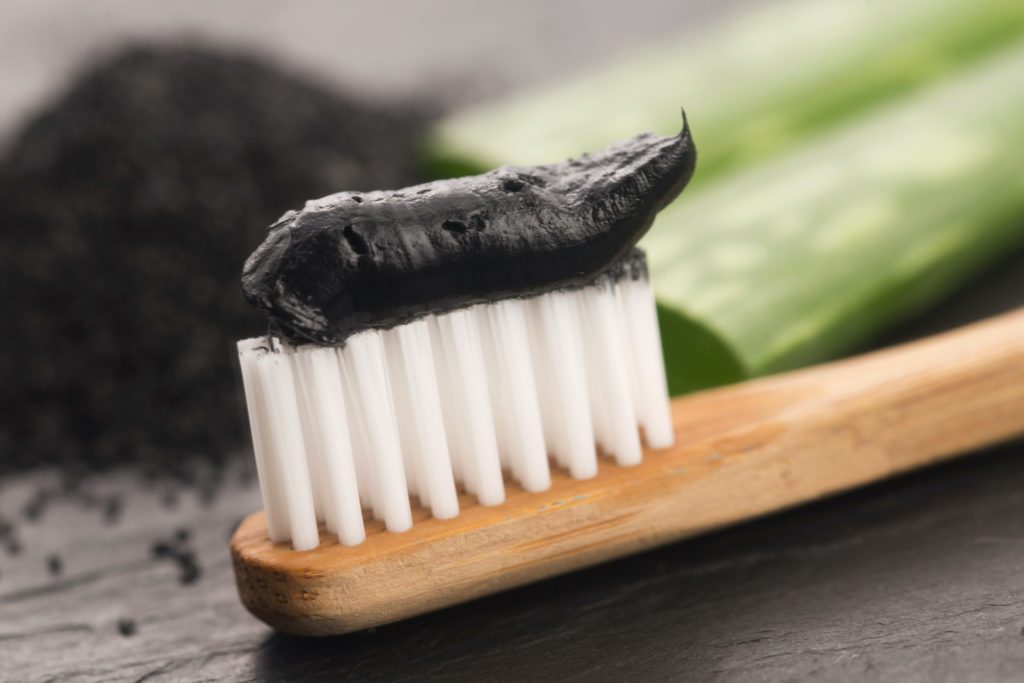
Activated charcoal is also known as activated carbon. It’s a fine black powder, made from superheating coal and other natural elements. It creates a porous substance. Typically, activated charcoal is used in emergency rooms to reverse drug overdoses. It’s only effective in certain overdose cases, and only for certain drugs.
It made its way into normal, everyday products. Advertisers for these products claim that activated charcoal eliminates toxins from the body. With toothpaste, marketers claim that it whitens teeth, remineralizes the enamel, and helps stop the harmful bacteria that cause tooth decay.
Activated charcoal does actually remove some discoloration from your teeth. However, it doesn’t reverse the yellowing of the teeth and can’t target deep stains. It only removes discoloration from the surface layer of your teeth.
The dentin layer is under that surface layer, the enamel. Dentin is usually what you’re seeing when you have discolored teeth. Dentin is naturally off-white, and our enamel thins over time. Our teeth appear discolored when this layer is showing through more prominently.
The Dangers of Activated Charcoal Toothpaste
Activated charcoal does have some pros for oral health. It removes surface stains and smooths the surfaces of your teeth with its abrasiveness. It also helps with bacteria and toxins that build up in the mouth. These cause halitosis, or bad breath, and activated charcoal minimizes the impact they have on your breath.
But activated charcoal toothpaste does more harm to your mouth than it does good. Its abrasive nature does smooth your teeth, but it also thins out your enamel. Abrasive toothpastes wear down enamel and your teeth will appear more yellow with long-term use of this toothpaste. That off-white dentin layer becomes more exposed as your enamel thins.
If your child uses charcoal toothpaste, it hinders the development of their teeth. Because it’s abrasive, it doesn’t allow the teeth to develop in the way they should. It can actually damage or harm your child’s teeth as their mouth is growing and developing.
Lastly, it actually increases the surface roughness of your teeth. It may appear to smooth your tooth surface, but it changes the surface of the tooth to be rougher. A rougher surface makes it easier for bacteria and food particles to adhere to your teeth. More bacteria means more tooth decay and cavities.
Frequently Asked Questions
Does charcoal toothpaste actually whiten teeth?
It can make teeth look a little brighter at first by scrubbing off some surface stains, like from coffee. But it can’t change the natural yellowish color inside your tooth, which is what usually makes teeth look dull. Over time, it can actually make teeth look more yellow.
Why would it make my teeth look more yellow?
Charcoal is gritty, like a very fine sandpaper. If you use it every day, that grit can slowly wear away your tooth’s protective outer layer (the enamel). As enamel gets thinner, more of the naturally yellowish layer underneath shows through.
Is it safe for kids to use?
We don’t recommend it for kids. Their teeth are still developing, and the abrasiveness can damage the new enamel that’s forming. It’s better to use a regular, kid-friendly fluoride toothpaste.
I heard it removes toxins. Is that true for your mouth?
While charcoal can grab onto some things, there’s no strong science showing it “detoxes” your mouth. Your saliva and good brushing with regular toothpaste are much better at keeping your mouth clean and healthy.
Can it damage my teeth?
Yes, if used regularly. The main risk is that it wears down enamel, which doesn’t grow back. Worn enamel leads to sensitive teeth and a higher risk for cavities. It can also make tooth surfaces rougher, which lets more stain-causing gunk stick to them.
What should I use to whiten my teeth instead?
For surface stains, a whitening toothpaste with the ADA Seal of Acceptance is a safer choice. For more noticeable whitening, talk to Dr. Chen about professional options like in-office whitening or safe take-home kits. These are designed to be effective without harming your enamel.
I already used it and my teeth feel sensitive. What should I do?
Stop using the charcoal toothpaste right away and switch to a sensitivity toothpaste or a regular fluoride paste. Mention the sensitivity at your next dental checkup. Dr. Chen can check your enamel and suggest the best way to help your teeth feel better.
Is one tube of charcoal toothpaste okay to try?
Even occasional use is abrasive. If you’re curious, it’s much better to ask your dentist first. They can look at your specific teeth and let you know if it’s too risky for you, or suggest a truly safer alternative to get the bright smile you want.
Schedule an Appointment With Your Plano, TX Dentist
Dr. Sara Chen is an experienced dentist in Plano, TX. If you’ve been using activated charcoal toothpaste and are suffering issues caused by it, we can help. Call us or schedule an appointment online today.